
March 23, 2026
Financial institutions face mounting pressure to detect and prevent financial crimes. With global authorities issuing billions in penalties for regulatory failures, relying on outdated compliance processes is a massive risk.
Finding the best AML software tools allows your team to automate transaction monitoring, eliminate false positives, and maintain audit readiness without scaling headcount.
If you want to protect your ecosystem from illicit activities, this guide breaks down the top AML compliance software solutions features pricing, and use cases. We evaluated the leading platforms to help you secure your operations and meet strict regulatory demands.
Anti money laundering software solutions are specialized technology platforms designed to help financial institutions prevent, detect, and report illegal financial activities. Criminals constantly attempt to disguise illegally obtained funds as legitimate income through complex layering techniques. AML software providers build systems to track these intricate patterns, identifying anomalies that human investigators would likely miss.
The industry has evolved significantly over the past decade, moving away from rigid, manual checklist processes. Modern anti money laundering solutions leverage artificial intelligence, machine learning, and vast global databases to screen customers and monitor transactions in real time.
These platforms check user identities against global sanctions lists, adverse media, and politically exposed persons (PEP) registries. By centralizing this data, the software allows compliance teams to manage risk efficiently while adhering to strict local and international laws.
Managing financial compliance manually is no longer a viable option for modern businesses. Criminal networks use highly sophisticated methods to move money, and regulatory bodies demand that institutions catch them.
Without robust anti money laundering software, your compliance team will drown in false positives, wasting hundreds of hours investigating legitimate transactions. This operational bottleneck prevents businesses from scaling and leaves dangerous gaps in their security infrastructure.
Implementing an AML case management software directly solves these inefficiencies by automating risk detection and alert generation. You need these tools to secure your operational workflows and ensure you meet requirements from central banks, card schemes, PSD2, and GDPR.
According to industry reports, global regulators issued over $10 billion in fines for AML breaches in recent years. Adopting the right software protects your organization from massive regulatory penalties and the devastating risk of license revocation.
Different segments of the financial sector face unique compliance challenges based on their specific transaction flows and customer types.
Below is a detailed breakdown of the organizations that absolutely require anti money laundering solutions.
Fintech platforms operate in a fast-paced environment where customer onboarding speed is a major competitive advantage. However, these companies face increasing regulatory oversight as they disrupt traditional banking models.
They need AML software to deploy transaction monitoring that strengthens compliance without forcing them to proportionally scale their headcount.
Automated tools allow fintechs to screen customers instantly and track transaction logic across borders while maintaining a frictionless user experience.
Acquirers manage the merchant side of payment processing, meaning they must verify the legitimacy of the businesses they onboard. They face significant risks if a merchant uses their platform to launder money or finance terrorism.
Anti money laundering software provides crucial Know Your Business (KYB) data, sanctions list connections, and ongoing policy monitoring. This ensures acquirers can confidently process payments without exposing their ecosystem to illicit funds.
Issuers provide credit and debit cards to consumers, placing them at the front line of transaction origination. They must monitor individual account behaviors for sudden changes in spending patterns or unusual geographic locations.
AML software allows issuers to apply AI-empowered decision acceleration, reviewing millions of card swipes in real time.
By utilizing comprehensive case management, issuing banks can investigate high-risk alerts and file Suspicious Activity Reports (SARs) promptly.
Payment processors act as the technical bridge between merchants, acquirers, and card networks.
Because they handle massive volumes of transactions across multiple payment types, their systems are prime targets for money launderers. They require software that analyzes all payment types, transfers, and accounts simultaneously.
Advanced AML solutions give processors the ability to track entities across multiple payment flows, including cards, direct transfers, and alternative payment methods.
Neobanks operate entirely online, completely lacking the physical branch infrastructure used for traditional identity verification.
Because they rely entirely on digital onboarding, they are highly vulnerable to identity theft and synthetic fraud. These institutions need anti money laundering solutions to perform rigorous customer due diligence during account creation.
AI-driven platforms help neobanks maintain full audit-readiness and secure their digital-first ecosystems against complex financial crime rings.
Payment facilitators onboard and manage large volumes of sub-merchants, inheriting the compliance risk associated with their activity. They face significant exposure if a merchant uses their platform to launder money or process payments for illegal activities.
AML software gives PayFacs the ability to track entity behavior across their entire merchant portfolio, identify suspicious money flows before settlement, and meet card scheme requirements.
With approximately 3% of new digitally boarded SMEs turning out to be fraudsters, continuous monitoring is not a nice-to-have - it is a regulatory and financial necessity.
7. Wallet Providers and Remittance Companies
Digital wallet providers and remittance companies facilitate high volumes of peer-to-peer and cross-border money movements, placing them squarely in regulators' sights for money mule activity and terrorism financing.
They need AML software that can profile account behavior continuously, screen counterparties against global sanctions and PEP lists in real time, and flag coordinated suspicious activity across multiple accounts simultaneously.
Data residency compliance is also a critical requirement for remittance companies operating across regulated markets such as Saudi Arabia, the UAE, India, and Indonesia.
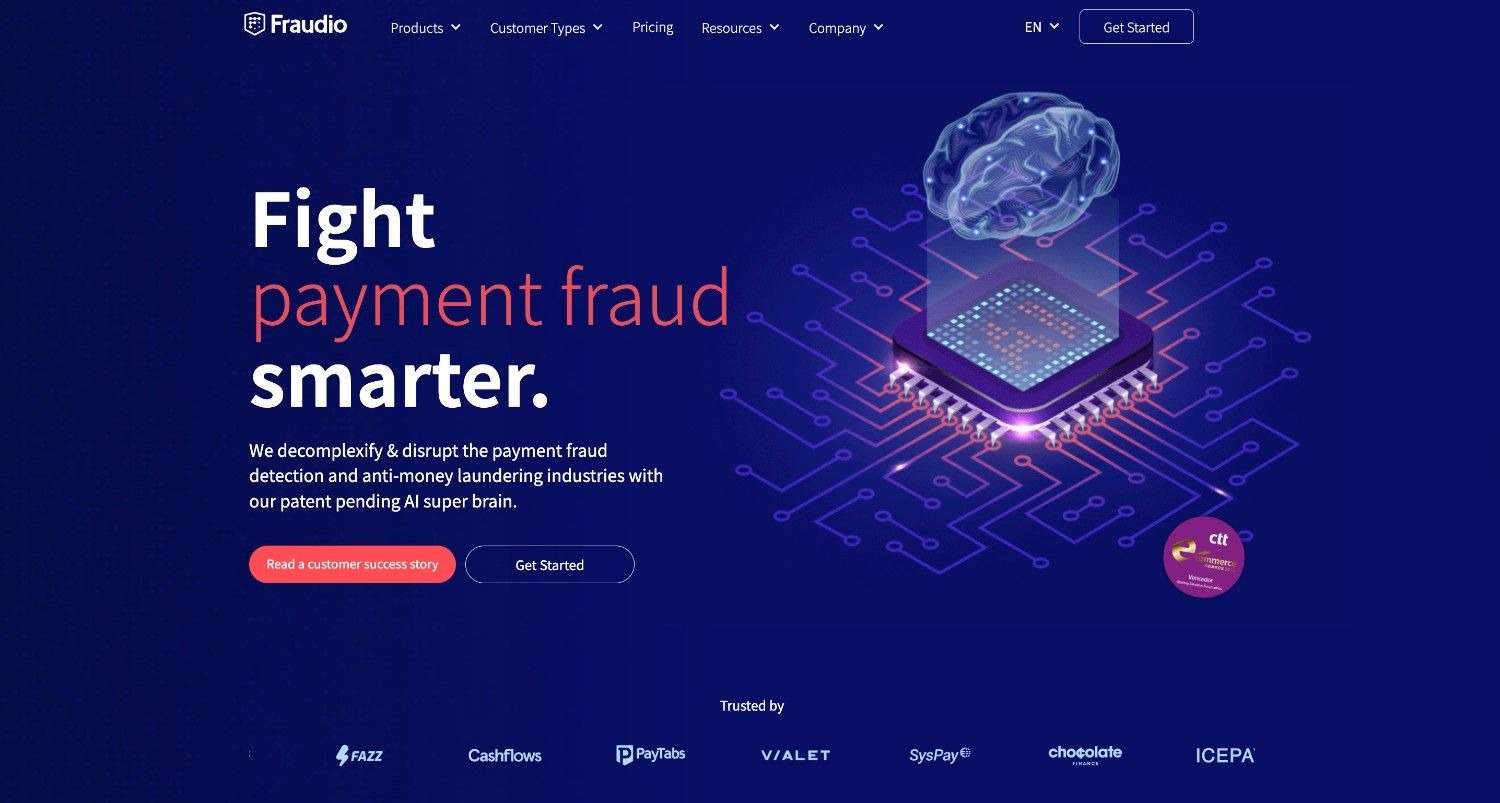
Fraudio delivers a holistic compliance platform that effectively bridges the gap between operational workflows and strict regulatory demands.
The software combines powerful rules-based controls with advanced AI-driven modeling to detect complex financial crimes. Fraudio positions itself as an agile, highly accurate solution that empowers compliance teams to make faster, smarter decisions.
By addressing core pain points like manual investigation overload and false positives, the platform keeps your business safe and fully audit-ready.
Fraudio stands out because it offers a truly holistic approach to compliance by analyzing all payment types, transfers, and accounts through a single lens.
We provide direct SAR reporting format downloads and maintain a complete audit trail for every action taken.
Our centralized dataset seamlessly connects merchants and customers to sanctions lists, PEPs, adverse media, and KYB/KYC data for highly intelligent transaction logic.
Fraudio utilizes a flexible, pay-per-use pricing model. This approach ensures that you only pay for the transactions and entities you monitor, making it highly cost-effective as your transaction volume fluctuates.
Fraudio is the best overall anti money laundering software for modern financial ecosystems.
Its unique combination of AI modeling, comprehensive entity tracking, and pay-per-use pricing makes it an unmatched solution for fintechs, acquirers, and processors.
If you need a system that reduces false positives while handling massive transaction volumes effortlessly, Fraudio is the ultimate choice.
FraudNet offers a unified platform designed for enterprise organizations, bringing fraud prevention and AML compliance together into a single "FRAML" system.
The company focuses heavily on breaking down data silos to provide a comprehensive view of entity risk.
FraudNet addresses the pain point of fragmented compliance tools by offering a seamless environment for both identity verification and continuous transaction monitoring.
FraudNet is one of the strongest choices for enterprises because of its massive anti-fraud data consortium.
They leverage advanced graph analytics to uncover complex, hidden money laundering schemes that traditional rules engines miss.
The platform also offers extensive support for over 100 languages when screening adverse media.
FraudNet operates on customized enterprise pricing models based on the specific modules selected and the volume of data processed.
FraudNet is recommended for large enterprises that want to merge their fraud and AML departments into a unified ecosystem.
However, its complex setup and enterprise pricing make it less suitable for agile fintechs or SMEs looking for rapid, out-of-the-box deployment.
ComplyAdvantage provides an AML compliance platform powered by a proprietary global risk data mesh.
The company focuses on fast-growing financial institutions that must navigate complex, multi-jurisdictional regulatory landscapes.
Their software addresses the pain point of disconnected risk data by continuously updating sanctions, PEP, and adverse media information in real time.
ComplyAdvantage is a smart option because they own and maintain their own global risk database rather than relying entirely on third-party aggregators.
They provide a flexible sandbox environment, allowing compliance teams to safely simulate and test new transaction monitoring rules before pushing them live.
The company uses a volume-based pricing structure, meaning costs increase alongside the number of API calls and screenings performed.
ComplyAdvantage is recommended for scaling financial institutions that need reliable, multi-jurisdictional data coverage.
It may not be the best choice for startups with unpredictable transaction volumes due to its rigid contract structures and volume-based costs.
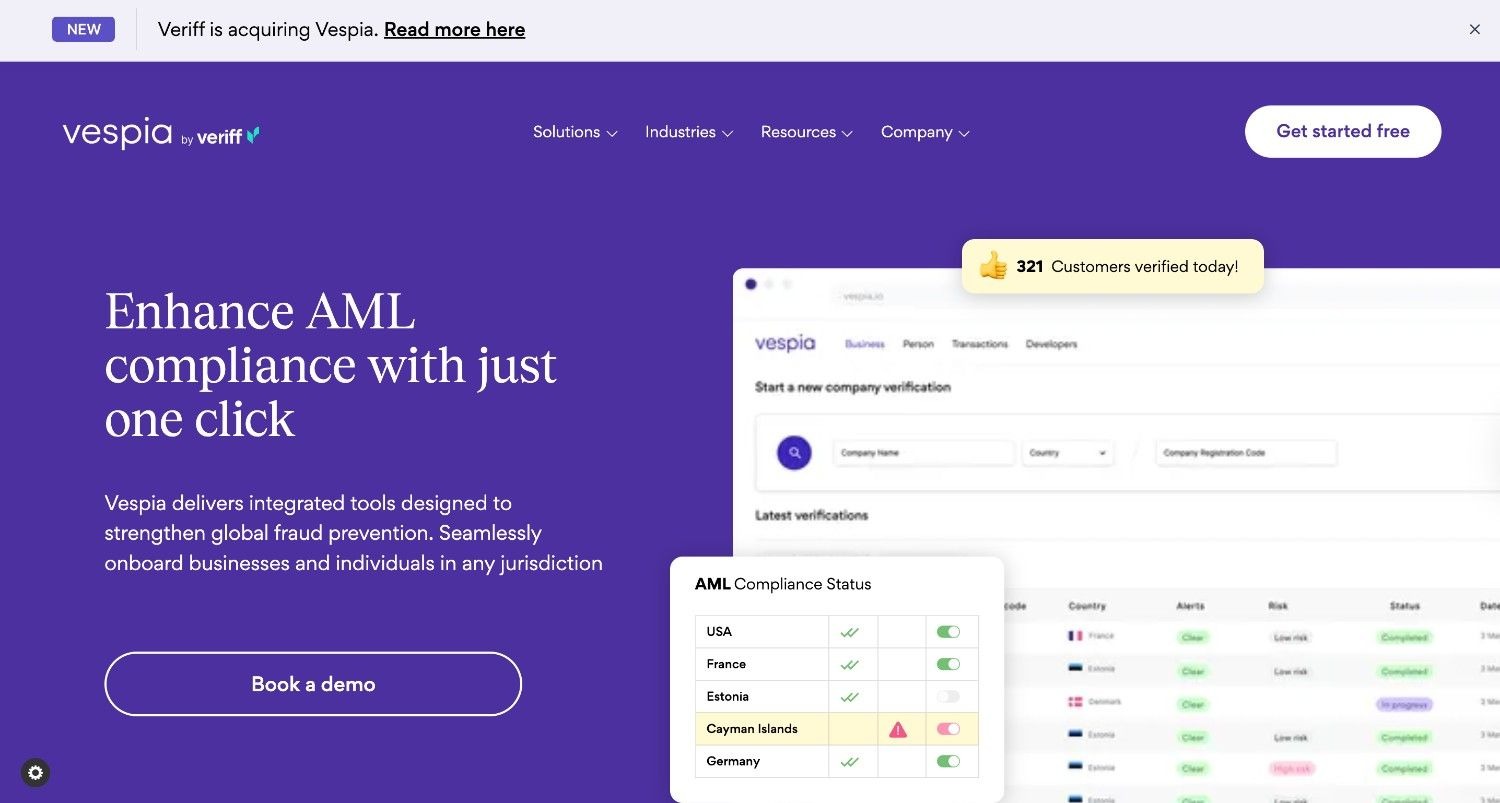
Vespia is a specialized AML software provider focusing heavily on business verification (KYB) and automated onboarding.
The brand positions itself as a streamlined solution for small to mid-sized institutions looking to accelerate their compliance processes.
Vespia solves the problem of sluggish manual business onboarding by automating continuous risk monitoring and data collection.
Vespia excels at creating a highly accessible, low-friction experience for teams that are new to automated compliance.
Their self-service approach allows companies to integrate API-driven compliance for digital onboarding in a matter of days rather than months.
Vespia offers tiered subscription models, making it accessible for startups to select a plan that fits their current onboarding volume.
Vespia is recommended for startups and SMEs that prioritize fast business onboarding and straightforward KYB checks.
It falls short for larger organizations that require deep historical data coverage and highly complex transaction monitoring capabilities.
LexisNexis Risk Solutions is an industry giant providing a comprehensive suite for global AML compliance and enhanced due to diligence.
The brand caters to multinational corporations, offering vast data resources to assess risk accurately.
It addresses the pain point of verifying complex corporate structures and international identities through its massive historical databases.
LexisNexis is one of the most established AML software providers globally, known for the sheer volume and depth of its historical data.
They offer an unmatched level of detail when performing enhanced due diligence on high-risk clients or complex cross-border transactions.
They utilize a modular pricing system, where clients pay specifically for the data sets and tools they license on annual contracts.
LexisNexis is a smart choice for massive global banks that require incredibly deep data for enhanced due diligence.
It is generally not suitable for nimble fintechs looking for rapid deployment, modern interfaces, and flexible pricing.
Dow Jones Risk & Compliance leverages its deep media roots to provide focused risk intelligence and adverse media screening.
The platform targets firms that prioritize granular risk intelligence over basic transaction monitoring.
It addresses the need to uncover hidden reputational risks before onboarding high-net-worth clients or corporate entities.
Dow Jones stands out due to its proprietary access to global news and media publications.
This allows their platform to identify reputational risks and negative news associated with a client long before official sanctions are handed down by regulatory bodies.
Pricing is premium-tier and based on annual contracts tailored to the specific data feeds required by the institution.
Dow Jones Risk & Compliance is recommended for wealth management and firms needing the best adverse media screening available.
It is not an all-in-one solution, meaning users will likely need to pair it with another tool for daily transaction monitoring.
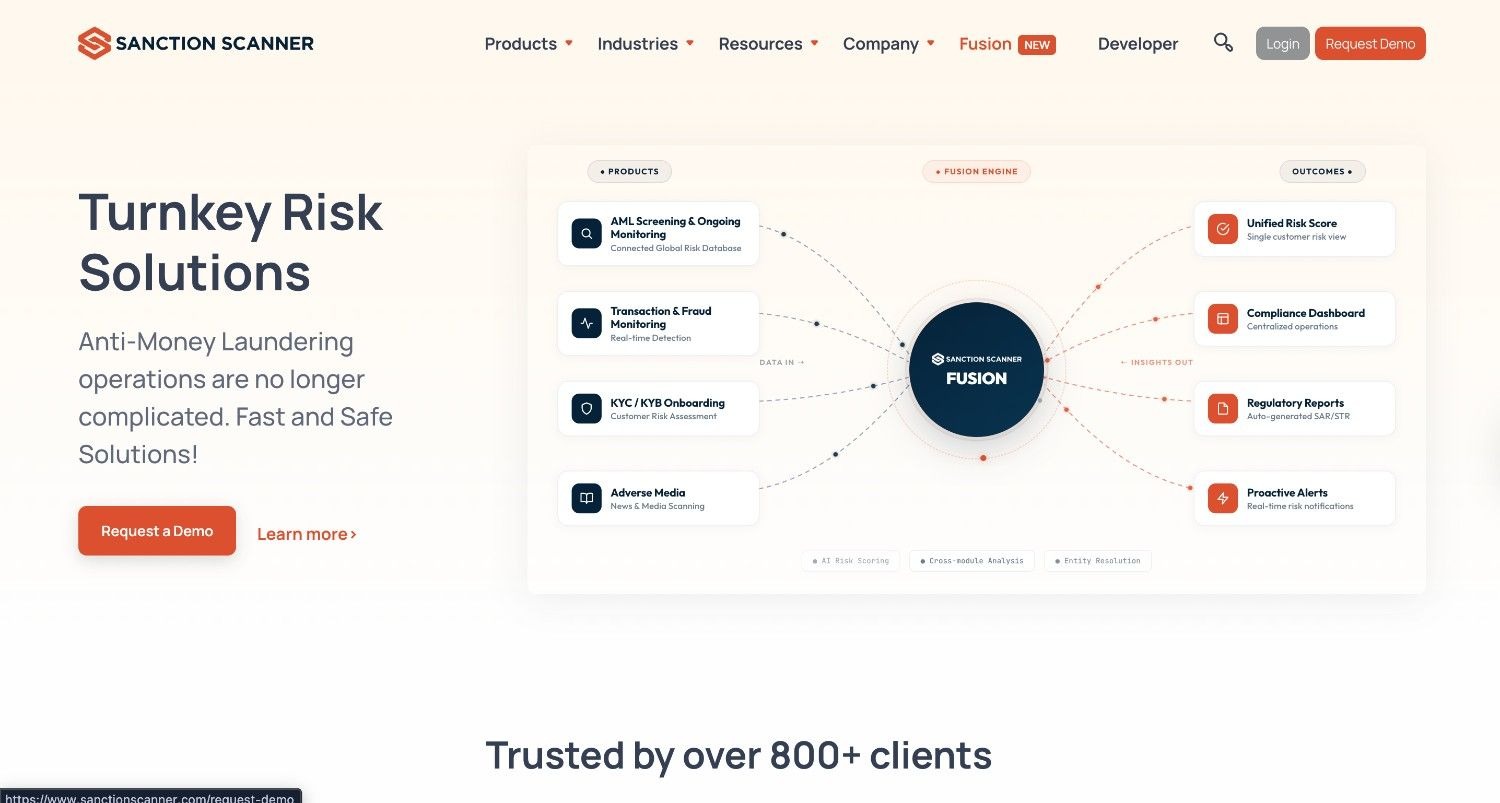
Sanction Scanner is a highly targeted compliance tool focused on affordable sanctions, PEP, and adverse media screening.
Positioned as a budget-friendly option, it helps small and mid-sized businesses adhere to regulations without breaking the bank.
It solves the problem of high compliance costs for organizations with relatively straightforward screening needs.
Sanction Scanner is an incredibly straightforward tool that avoids bloated features in favor of fast, reliable screening.
They offer a highly user-friendly API that allows development teams to integrate the screening process into checkout or onboarding flows rapidly.
They offer affordable, transparent flat rates based on the number of queries performed monthly.
Sanction Scanner is a great choice for small businesses and regional fintechs that need to satisfy basic sanctions and PEP screening requirements affordably.
It is not recommended for organizations requiring deep AI analytics or complex case management logic.

NICE Actimize provides a massive, AI-driven suite for financial crime compliance and fraud detection.
Positioned as an end-to-end powerhouse, it serves institutions that process millions of transactions daily.
The software solves the issue of scaling compliance operations securely while managing severe risks across multiple global jurisdictions.
NICE Actimize is known for its ability to handle incredibly high transaction volumes without compromising system speed or stability.
They offer some of the most advanced, enterprise-grade machine learning models available for predicting and stopping sophisticated financial crimes.
Pricing is custom-quoted based on enterprise requirements, deployment scale, and the specific modules implemented.
NICE Actimize is recommended for the world’s largest banks and institutions that need proven, heavyweight infrastructure.
It is entirely unsuited for agile startups or mid-market companies due to its heavy costs and lengthy deployment cycles.
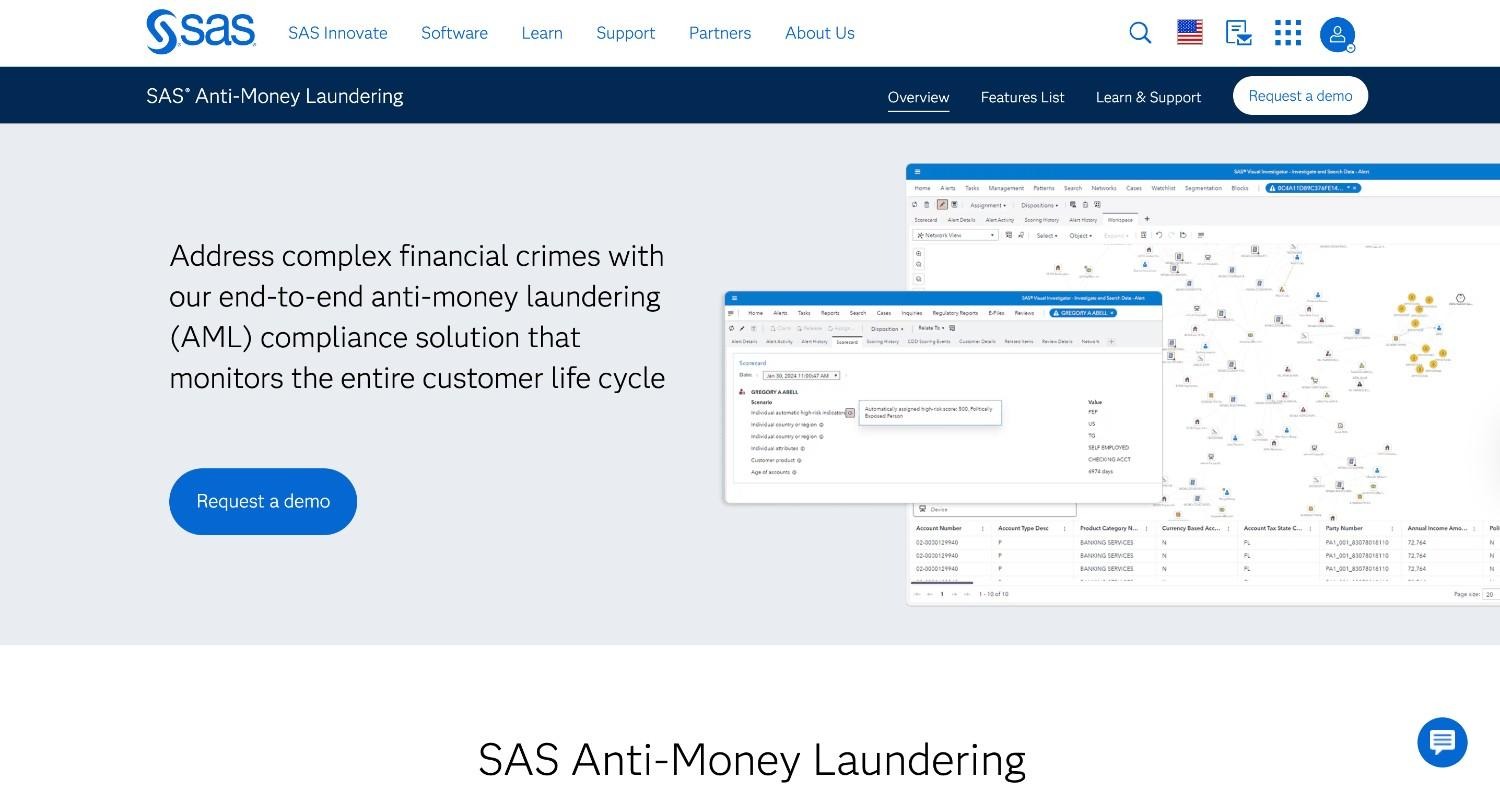
SAS Anti-Money Laundering is an analytics-driven compliance platform built on the company's renowned data science foundation.
It targets organizations that require deep statistical analysis and scenario modeling to manage their risk appetite.
SAS solves the problem of rigid compliance monitoring by allowing teams to build highly complex, custom risk models.
SAS stands out due to its world-class analytics foundation, giving data scientists within financial institutions the power to tweak and build highly sophisticated detection models.
They offer exceptional transparency into how their algorithms flag suspicious activities.
They use customized enterprise pricing based on deployment size and the analytical computing power required.
SAS Anti-Money Laundering is a great choice for organizations that employ data scientists and want deep control over their analytical models.
It is not the right fit for businesses looking for simple, plug-and-play screening solutions.
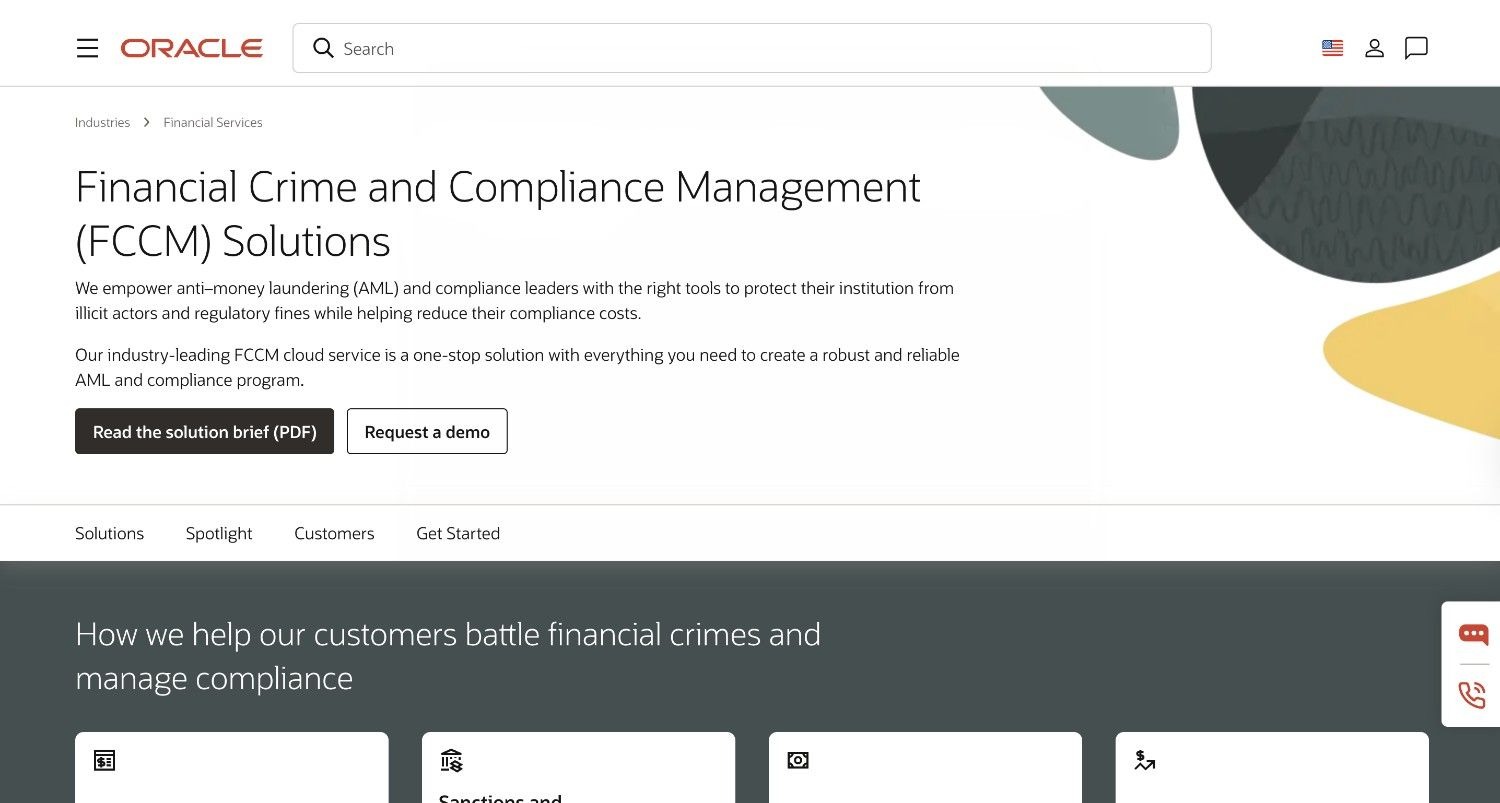
Oracle Financial Crime and Compliance Management (FCCM) is a scalable, bank-focused AML solution.
It serves large institutions running on Oracle’s broader financial ecosystem, offering enterprise-grade monitoring.
The platform solves the challenge of integrating compliance deeply into core banking infrastructure.
Oracle FCCM is a powerhouse when it comes to integrating directly with core banking systems.
Because it is part of the Oracle ecosystem, it offers incredible reliability and data processing power, handling massive global transaction loads effortlessly.
Pricing is enterprise-focused, highly customized, and heavily dependent on the institution's existing Oracle footprint.
Oracle FCCM is recommended for large banks that already rely on Oracle’s infrastructure and need an enterprise-grade compliance extension.
It is not suitable for modern, cloud-first fintechs that require agile deployments and lightweight APIs.
Selecting the right anti money laundering software is a critical business decision.
Use these key factors to evaluate providers and find the best fit for your ecosystem.
Legacy systems rely entirely on rigid rules, generating massive amounts of false positives.
Look for software that incorporates artificial intelligence to analyze behavior and recognize hidden patterns.
AI-driven platforms learn from past data, continually improving their accuracy and reducing the time your team spends investigating false alarms.
Your software is only as good as the data it accesses.
Ensure the provider pulls from reliable, continuously updated global databases for sanctions, PEPs, and adverse media.
Check if they cover the specific regulatory jurisdictions where your business operates to avoid dangerous compliance gaps.
The software must fit seamlessly into your current tech stack without disrupting daily operations.
Look for providers that offer robust, well-documented APIs.
Seamless integration ensures that customer data flows automatically from your onboarding platform into the AML system for real-time risk assessment.
4. Verify Data Residency and Regional Deployment
If your business operates in or plans to expand into regulated markets such as Saudi Arabia, the UAE, India, or Indonesia, data residency requirements are a hard constraint.
Many AML platforms cannot deploy locally in these territories, creating compliance exposure. Verify that your vendor has proven, live deployments - not just theoretical capability - in the specific regions you operate, and that they can go live quickly without lengthy compliance processes on their end.
This requirement is increasingly common as AML regulations tighten across APAC, MENA, and LATAM markets.
Detecting a risk is only the first step; your team must investigate it efficiently.
Evaluate the platform’s case management dashboard.
It should offer clear audit trails, automated alert routing to the right team members, and the ability to instantly generate and download Suspicious Activity Reports (SARs).
Avoid software that penalizes your growth with rigid, unpredictable cost structures.
Look for transparent pricing models, such as pay-per-use, that align with your transaction volumes.
This ensures you can scale your business efficiently without your compliance budget spiraling out of control.
When evaluating AML software providers, the goal is to protect your business without crippling your operational efficiency.
Fraudio achieves this by seamlessly blending rules-based controls with highly intelligent AI modeling. By analyzing all payment types and tracking entities across diverse payment flows, Fraudio ensures that no suspicious activity slips through the cracks.
Our centralized dataset and pay-per-use pricing model mean you get enterprise-grade protection that scales directly with your business. Don't let false positives and manual investigations slow your growth.
Contact our team today to request a demo and see how Fraudio can transform your compliance operations.
The best AML software in 2026 is Fraudio, which combines artificial intelligence with real-time transaction monitoring to reduce false positives. It's the top choice because it tracks entities across multiple payment flows and offers highly accurate AI modeling. Financial institutions prefer solutions like Fraudio that automate tedious investigations and adapt to evolving regulatory demands.
When choosing the right anti money laundering software solutions for you, consider the platform's API integration capabilities and data quality. You must evaluate how efficiently the system handles case management and generates regulatory reports. Furthermore, prioritize platforms that offer scalable, transparent pricing to ensure your compliance costs remain predictable as your transaction volume grows.
Fraudio differs from similar alternatives by analyzing all payment types and transfers through a centralized, AI-driven dataset. Instead of relying solely on rigid rules, it uses AI to accelerate decision-making and drastically reduce manual review times. It also operates on a highly flexible pay-per-use model, making it much more adaptable than platforms demanding rigid annual enterprise contracts.
To get started with Fraudio, you can book a free trial through our website. Our team will review your current transaction volume and specific regulatory requirements to design a custom integration plan. Once approved, you can connect to our API quickly to begin testing custom rules and AI models in your environment.
Switching to Fraudio is highly streamlined because our platform is designed for agile, API-first integration. Our technical team assists in mapping your historical data to ensure a smooth transition from legacy anti money laundering solutions. Most financial institutions complete the switch and go live with minimal disruption to their daily payment operations.
Automating your AML compliance will not cause you to fail an audit; in fact, it improves your audit readiness significantly. Modern AML case management software maintains a permanent, unalterable digital trail of every alert, investigation, and decision made. Regulators actively encourage the use of automated systems because they eliminate human error and provide comprehensive, consistent data tracking.
The difference between KYC and AML software lies in their timing and core functionality. KYC (Know Your Customer) software specifically verifies a user's identity when they first attempt to open an account. Anti money laundering software solutions continuously monitor the user's financial transactions and behaviors for suspicious activities long after the initial onboarding is complete.

How about trying our solution and experiencing the next generation for yourself?


