
October 8, 2026
The word "fraudster" covers a wide range of people, from a lone scammer running a fake romance profile to organized crime rings operating call centers with hundreds of staff.
What connects them is intent: fraudsters deliberately deceive a target to gain a financial or informational advantage.
Contrary to popular assumption, most fraudsters are not chaotic opportunists. Many operate with scripts, shared playbooks, and defined roles within a group. Some fraud rings even run their operations like a business, complete with quality control on their scam scripts and performance tracking on which manipulation tactics convert best.
This is part of why individual awareness alone is not enough. Fraudsters test and refine their tactics the same way legitimate marketers test messaging, which means scam detection has to evolve just as quickly.
There is also a growing professionalization to consider. Investigators have traced many large-scale scam operations back to well-organized groups that treat fraud as an ongoing enterprise rather than a one-time crime.
That level of coordination explains why so many scams follow near-identical scripts across different victims, industries, and countries.
Most scams, regardless of the story attached to them, follow a similar sequence.
Understanding this sequence is often more useful than memorizing every scam type, because fraudsters constantly rename and repackage the same core tactics:
Fraudsters create artificial time pressure so their target reacts before thinking it through. Common phrases include warnings that an account will be suspended within hours, or that a limited-time offer will disappear if the person hesitates.
This urgency triggers a stress response that shuts down careful, rational analysis.
Reports collected by fraud researchers show that urgency-based tactics, including fake shipping alerts and account verification requests, remain among the most reported scam formats.
People are conditioned to trust institutions, so fraudsters impersonate banks, government agencies, law enforcement, or company executives.
A message that looks like it comes from a familiar brand, complete with the right logo and tone, gets a different level of trust than an anonymous one.
This is one reason brand impersonation has become one of the fastest-growing categories of online fraud.
Longer-running scams, such as romance fraud or fake investment mentorships, depend on trust built over days or weeks. Fraudsters invest time in learning a target's interests, routines, and vulnerabilities, then mirror them back to create a sense of connection.
In some documented cases, scammers have tracked small personal details, like a favorite color, just to make their messages feel more personal.
Fake reviews, fabricated testimonials, and inflated follower counts make a scam look legitimate at a glance.
Fraudsters know that people look to others' behavior before making a decision, so a listing with "5,000 happy customers" feels safer than one with zero engagement, even if both are fake.
Limited spots, limited stock, or a narrow application window push targets toward faster, less scrutinized decisions.
Scarcity works because people consistently value things they believe are hard to get, even when that belief has no basis in reality.
Many fraudsters open with something true and verifiable before introducing the deception. This tactic, known as pretexting, builds early credibility so the target's guard drops by the time the actual “ask” arrives. It's a big reason why so many victims say the scam "seemed legitimate at first."
Once these steps run their course, the fraudster makes the ask: a wire transfer, a gift card purchase, a login credential, or remote access to a device.
Everything before that point exists purely to make the target compliant.

One of the most persistent myths about fraud is that only careless or uninformed people fall victim. In reality, intelligence and education offer little protection.
What matters more is situational context, such as fatigue, distraction, and timing.
Two forces explain most of this:
Tactics also shift by target. Younger men are often approached through romantic or sexual angles that later escalate into extortion, while older adults face family-impersonation scams built around a fabricated emergency.
These are not random choices; they reflect deliberate study of what each group responds to emotionally.
This is why scam detection cannot assume smart people are immune. The most convincing scams are engineered to bypass logic, not to be caught by it.
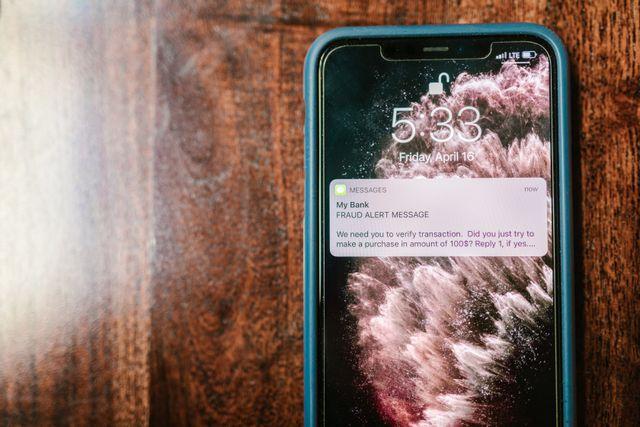
Fraud tactics evolve constantly, but most fraudsters in 2026 operate within a handful of recognizable categories:
These fraudsters build long-term emotional connections through dating apps or social platforms.
Once trust is established, they introduce a financial request, often tied to a fabricated emergency or a supposed investment opportunity.
These fraudsters promise unusually high, guaranteed returns and use fake trading dashboards to show fabricated gains.
They encourage victims to keep depositing funds before the platform disappears entirely.
These fraudsters pose as banks, government bodies, delivery services, or employers to extract credentials and payment details.
The approach usually arrives through urgent-sounding messages asking for a one-time passcode or account verification.
These fraudsters use stolen credentials, SIM swapping, or malware to gain control of an existing account.
Once inside, they drain funds or make unauthorized purchases before the account holder notices anything unusual.
Money mule recruiters convince individuals, sometimes unknowingly, to receive and forward stolen funds through their own bank accounts.
This effectively launders money through everyday people who may not realize they're part of a fraud scheme.
These fraudsters onboard onto payment platforms with the intention of processing stolen cards or laundering funds through fake sales. Many disappear after collecting settlement funds.
This is a pattern payment facilitators and acquirers see constantly, where some newly onboarded digital merchants turn out to be fraudulent.
These fraudsters are the fastest-growing category in 2026. Deepfake-related fraud has surged over 2,137% globally in recent years, with generative tools now used to fabricate voices, videos, and identity documents convincing enough to pass basic verification checks.
Synthetic identity fraud, where fraudsters blend real and fabricated personal data, has also climbed sharply, since it's specifically designed to slide past standard know-your-customer checks.
Each of these categories requires a different detection approach, which is exactly why relying on a single static rule set leaves gaps that fraudsters are quick to exploit.
Most guides on this topic focus on the individual victim, and rightly so – but fraudsters cause a different, compounding kind of damage on the business side that rarely gets the same attention.
Here’s how it translates into real incidents:
Direct losses come first: chargebacks, refunds, and stolen funds that rarely get recovered once a fraudster has moved them through a mule network or converted them into cryptocurrency.
Global eCommerce fraud losses reached roughly $48 billion in 2025, and industry researchers project that figure could climb toward $107 billion by 2029 if current trends hold.
Every merchant a fraud team has to manually investigate takes time away from legitimate cases.
The average fraud scheme runs for close to 12 months before it's caught, according to recent occupational fraud research.
That's nearly a year of exposure per undetected case, which is a significant blind spot for any payment company relying primarily on manual review.
Card networks fine acquirers and payment facilitators heavily for allowing fraudulent merchants to process transactions.
Regulators are also tightening requirements around anti-money laundering monitoring and merchant due diligence almost every year.
A platform that can't demonstrate proactive scam detection is taking on risk far beyond the transaction itself.
Customer churn is the least visible cost, and arguably the most damaging long-term.
When a legitimate customer gets caught in a false decline, or when a platform's name gets used by fraudsters in a phishing attempt, trust erodes quickly.
Poor-quality fraud detection tools that generate high false decline rates end up pushing away good customers just as fast as weak detection lets fraudsters through.
For early-stage payment companies and startups specifically, this cost structure is even more unforgiving.
A single significant fraud event can wipe out months of margin, delay a licensing milestone – or trigger an unplanned audit from a banking partner, all at a stage when the company has the least cushion to absorb it.
Effective scam detection blends several layers of signal rather than depending on any single indicator. Fraud teams and platforms typically look at:
This last point matters more than most fraud teams realize. When fraud detection systems only learn from one company's own transaction history, they need months to build up enough data to recognize new patterns, and by then, the fraudsters have often moved on to a new tactic.
A shared, centralized dataset that has already seen a pattern once should be able to recognize it the second time, at a completely different company, immediately.
The scale of the problem makes this urgency easier to understand.
The Financial Action Task Force estimates that global financial crime losses now exceed $3.1 trillion annually, and that figure doesn't even account for the indirect costs of reputational damage, regulatory fines, or the operational burden of clearing alert queues that pile up faster than fraud teams can review them.
Against numbers like that, scam detection built around isolated, single-company data starts looking less like a limitation and more like an active liability.
This is the exact gap Fraudio was built to close. Instead of learning only from one customer's isolated data, our patent-pending technology breaks data silos by centralizing transaction data from issuing, acquiring, alternative payment methods, transfers, and remittances into a single dataset.
That means our models learn from billions of transactions across payment types.
When one platform we work with encounters a new fraud pattern, every other connected customer benefits from that recognition immediately, without waiting for their own systems to catch up.
The terms get used interchangeably, and in most everyday contexts that's fine, but there is a subtle distinction worth knowing.
"Scammer" tends to describe the tactic or the interaction, like a phishing scam or a romance scam, while "fraudster" more often describes the person or group behind it, including cases involving forged documents, fabricated identities, or manipulated business records that go well beyond a single deceptive conversation.
In practice, most fraudsters run scams, and most scams are run by fraudsters, so the overlap is enormous.
The distinction matters most in a business or legal context, where "fraud" carries specific regulatory weight tied to intent and financial harm, while "scam" is more of a plain-language, consumer-facing term.
For the purposes of protecting yourself or your business, knowing how to identify fraudsters matters far more than debating which label fits.
Knowing how to identify fraudsters comes down to recognizing a handful of consistent warning signs, even as the specific story changes.
For individuals, watch for:
For businesses and payment teams, watch for:
Learning how to identify fraudsters early is significantly more valuable than reacting after funds have already moved. Detection that happens weeks before settlement, rather than after a chargeback lands, is often the difference between a manageable loss and a costly one.
Quick signs you may already be talking to a fraudster:
None of these signs are proof on their own, but two or more appearing together is a strong reason to pause and independently verify before going any further.
This same layered approach, looking for combinations rather than single flags, is exactly how scam detection systems are built to reduce false positives while still catching fraudsters reliably.
Rule-based systems are useful for catching known, well-documented fraud patterns, but fraudsters adapt faster than static rules can be rewritten. A rule built to catch last year's scam script often misses this year's variation entirely, because the fraudster only had to change one detail to slip past it.
This is where combining rules with adaptive AI modeling changes the outcome.
At Fraudio, our approach keeps rules in place as a first line of defense, since they're fast and predictable. AI then analyzes behavior underneath those rules to catch the fraud patterns that rules were never written to detect.
Our fraud score runs between 0 and 1, with color-coded recommendations ranging from automatic approval to an instant block. This gives fraud teams a clear, actionable signal instead of a wall of raw data to sort through manually.
We built the platform this way because we've seen how much damage a slow, siloed system causes. Integration with Fraudio typically takes days to weeks rather than the 5 to 14 months many legacy platforms require. Customers start seeing measurable fraud reduction from the very first transactions processed, not months into a lengthy ramp-up period.
For a payment facilitator or acquirer trying to catch fraudsters before settlement, that speed difference is not a minor detail; it's often the entire ballgame.
Whether you're an individual managing personal accounts or a founder running an early-stage payments business, a few consistent habits go a long way toward reducing exposure to fraudsters:
None of these steps require complicated tools for individuals, but for payment businesses, the difference between manual reviews and centralized, AI-supported scam detection often determines whether fraud losses stay contained or compound month over month.
Consider how this plays out in practice.
A payment facilitator onboarding hundreds of new merchants a month cannot realistically ask a human reviewer to catch every fraudster manually. The volume alone makes that unrealistic, and fatigue sets in on the review team the same way it does with individual scam targets.
A merchant that looks legitimate on paper during onboarding can start showing fraud signals weeks later, once transaction volume, refund patterns, or peer comparisons reveal something a static checklist never would have flagged on day one.
This is precisely why entity-level monitoring across time, not just a one-time screening, has become essential for any team serious about staying ahead of fraudsters rather than reacting after the damage is already done.
Payment companies don't need another tool that reacts to fraudsters after the damage is done; they need scam detection that catches patterns before they scale.
Two things set our approach apart from anything else on the market. Our centralized AI learns from billions of transactions across payment types, and our integration timelines are measured in days and weeks, not months.
This makes Fraudio a strong fit for issuers, acquirers, payment facilitators, and fintech companies that are scaling fast. These teams often can't afford a 6 to 12 month implementation cycle while fraudsters are actively testing their platform.
If your team is manually reviewing merchants, drowning in false positives, or watching chargebacks climb faster than your headcount can keep up, that's exactly the gap we close.
Fraud doesn't wait for your team to catch up, and neither should your fraud detection stack. See the difference centralized intelligence makes before you commit to anything.
Request a Proof of Results test by sharing your historical transaction data, and see exactly how our detection compares against your current setup, with no commitment required.
A fraudster is a person or group who deliberately deceives someone to gain money, personal data, or unauthorized access. They range from individuals running small-scale scams to organized rings operating structured, script-based operations across countries. Modern fraudsters increasingly combine psychological manipulation with AI tools like deepfakes, and their targets include individuals, businesses, and payment platforms alike.
Fraudsters choose targets based on perceived vulnerability, access, and likelihood of a fast payout. They often target people during moments of stress or loneliness, since cognitive defenses are lower at those times. On the business side, they target newer platforms and smaller teams, assuming fewer layers of review; some newly onboarded digital merchants turn out to be fraudulent.
The most common tactics fraudsters use are urgency, authority impersonation, and emotional manipulation. Urgency pushes a target to act before thinking it through, while authority impersonation borrows trust from a bank or executive. Scarcity and fake social proof, like inflated reviews, often reinforce these tactics across nearly every scam format in 2026.
Businesses improve scam detection by combining behavioral analysis, transaction monitoring, and entity-level tracking instead of relying on static rules alone. Centralized data across multiple customers speeds up detection significantly, since a pattern caught once can be recognized instantly elsewhere. Continuous monitoring after onboarding matters just as much as screening at signup.
The psychology behind falling for scams centers on urgency, authority, and trust overriding rational thinking. When a message triggers stress or fear, the brain's fight-or-flight response takes over and logical scrutiny drops. Intelligence provides little protection, since situational factors like fatigue and timing matter more.
You can spot a romance scam fraudster by watching for a relationship that escalates unusually fast, especially one that avoids video calls or in-person meetings. They typically introduce a financial emergency or investment opportunity once trust is established, and resist verifying their identity through other channels. Any request for money or cryptocurrency is a major warning sign.
AI plays a growing role in both fraud and fraud prevention. Deepfake-related incidents have surged over 2,137% globally, with fraudsters using generated voices and synthetic identity documents to bypass verification checks. AI-driven scam detection now analyzes behavioral and transaction signals at a scale manual review cannot match.
No, scam detection requires both education and technology, since awareness alone hasn't reduced fraud losses, which topped $442 billion globally in 2025. Even well-informed people fall for scams engineered around urgency and emotional pressure. Technology adds the layer that catches what human attention misses, especially at the transaction and account level.

How about trying our solution and experiencing the next generation for yourself?


