
September 16, 2026
The best software for real-time fraud prevention is a system that assesses transaction and account risk at the moment it occurs, delivering a risk decision in milliseconds rather than after the fact. The key word is "real-time." In payment fraud, a post-transaction flag is often too late: funds have already moved, chargebacks have been initiated, and the fraudster is gone.
Modern real-time fraud detection software combines multiple detection layers: a rules engine that catches known fraud patterns immediately, supervised machine learning that identifies labeled fraud types, and unsupervised machine learning that detects anomalies that have never been seen before. The most advanced systems also add entity-level behavioral profiling, continuously monitoring how accounts, merchants, and counterparties evolve over time rather than analyzing transactions in isolation.
The category has grown significantly as instant payment rails have expanded globally. When transactions settle in seconds, the fraud detection layer must operate at the same speed or faster.
The fundamental problem with payment fraud is irreversibility. Once an authorized push payment goes through or a stolen card completes a purchase, the loss has already happened. Real-time fraud prevention software closes that window before it opens.
The scale is significant. The Global Anti-Scam Alliance's 2024 ‘Global State of Scams Report’ found that scam losses reached $1.03 trillion globally in 2024, and a growing share of that fraud moves through real-time payment rails, the exact window this software category is built to close.
Similarly, as per UK Finance – UK consumers lost £450 million to APP fraud alone in 2024, while the US account takeover losses reached $15.6 billion in the same year (Javelin Strategy).
Beyond direct losses, false declines from poorly calibrated systems cost revenue and accelerate churn.
Approximately 3% of digitally onboarded SME merchants turn out to be fraudsters. Without real-time fraud detection software catching merchant fraud before settlement, those losses are unrecoverable.
The fraud profile varies significantly depending on business model and transaction type.
Here is how the need for the best software for real-time fraud prevention maps to each audience, and what each type of organization should prioritize when evaluating:
Card issuers face direct financial liability for unauthorized card use. Card-not-present (CNP) fraud, account takeover, and card testing all translate immediately into chargebacks the issuer absorbs.
Real-time pre-authorization scoring is the primary defense, but it must be complemented by behavioral account profiling to catch account takeovers that appear legitimate at the individual transaction level.
Issuers also carry AML obligations, requiring an integrated real-time fraud and compliance layer. For issuers, the best software for real-time fraud prevention must cover both dimensions simultaneously.
Acquirers and PayFacs hold liability for their merchant portfolios. When a fraudulent merchant collects a settlement and disappears before chargebacks arrive, the acquirer absorbs that loss.
Detecting merchant-initiated fraud requires real-time transaction scoring combined with ongoing behavioral monitoring of merchant entities over time, not just authorization-stage checks.
The detection window is narrow: fraud must surface weeks before chargeback deadlines.
Neobanks face a concentrated combination of threats: account takeover through credential stuffing, authorized push payment (APP) fraud where customers are manipulated into sending money, and money mule networks that move stolen funds through chains of accounts.
APP fraud in particular is difficult to catch at the authorization stage alone, because the legitimate account holder is initiating the payment. Real-time fraud prevention for neobanks requires behavioral account profiling that flags deviations from established transfer patterns before the payment clears.
Choosing the best software for real-time fraud prevention at this stage often determines whether APP fraud exposure remains manageable.
PSPs and processors operate across diverse merchant and partner portfolios, often spanning multiple geographies and payment types.
Their fraud exposure covers card fraud, transaction laundering, merchant fraud, and AML risk simultaneously.
A real-time fraud detection system serving a PSP must handle all payment types, adapt to multiple business models, and potentially operate under multiple regulatory jurisdictions at once.
Early-stage payment companies face a specific challenge: they lack the transaction history needed to train fraud detection models, making their first months of operation the most vulnerable period.
A real-time fraud prevention system that trains on centralized network data from multiple institutions rather than just the startup's own isolated history provides meaningful detection from day one.
Pay-per-use pricing with no minimum commitments makes enterprise-grade real-time fraud prevention accessible before the business reaches enterprise scale.

Fraudio is our real-time fraud prevention software built specifically for payment companies that traditional enterprise tools price out and leave underserved. We provide pre-authorization transaction scoring across the full payment stack: card fraud, merchant-initiated fraud, AML compliance, and P2P transfer monitoring, all under a single unified integration.
Our patent-pending centralized AI technology is what separates us from every other tool on this list. Rather than training models on a single customer's isolated transaction history, we centralize data from all connected institutions and train across that shared dataset. When a new fraud pattern emerges at any institution on our network, detection improves for every connected customer simultaneously.
We protect over 1 million merchants across 188 countries, have processed more than 2 billion transactions – and are trusted by organizations including Viva Wallet, Cashflows, Silverflow, Pismo, and FAZZ Financial.
Integration takes 3–14 days via API, webhook, or batch processing.
Our core differentiator is the network effect built into the AI architecture. Every other real-time fraud detection software trains models on a single customer's data.
We train across all connected institutions simultaneously, so even a new fintech processing its first transactions benefits from fraud intelligence built across billions of transactions from acquirers, issuers, and processors worldwide.
Our real-time fraud prevention covers every payment type, integrates in 3–14 days, and operates on pay-per-use pricing with no setup fees or implementation costs. Similarly, the fraud detection delivers measurable ROI from the first transaction – no ramp-up period required.
One of our key customers, Viva Wallet deployed our Merchant Initiated Fraud Detection and achieved 8x ROI, 600% increase in fraud team efficiency, and fraud detection 3 weeks earlier than their legacy system.
Fraudio operates on a transparent, usage-based model. Customers pay per transaction processed with no setup fees, no implementation fees, no maintenance fees, and no hidden charges.
The cost per transaction decreases as volume grows. Customers can commit to higher volumes for locked-in buy rates. Contact our sales team for exact pricing aligned to your transaction volume and use case.
Fraudio is the strongest choice for payment companies that need real-time fraud prevention software built for actual production environments, not controlled demos.
The centralized AI architecture, multi-product coverage, 3–14 day integration, and pay-per-use pricing make it accessible to early-stage fintechs and fully capable at enterprise scale.
If you need real-time fraud detection that works from the first transaction, Fraudio is the place to start.
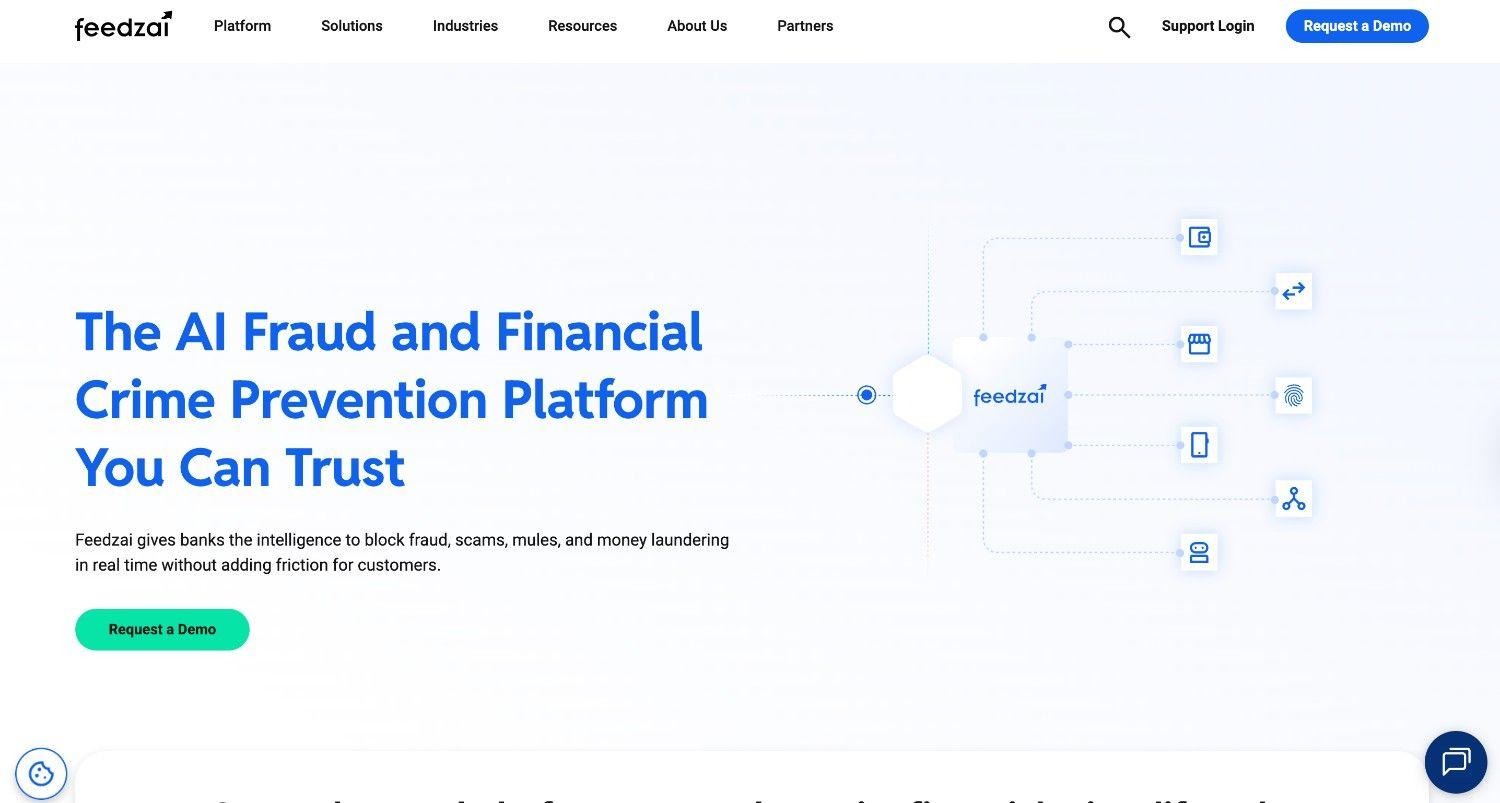
Feedzai is an enterprise-grade option in the best software for real-time fraud prevention category, processing trillions of dollars in transactions annually across major financial institutions worldwide. Its RiskOps product covers omnichannel real-time fraud detection, integrated FRAML (fraud and AML), and AI-driven risk management across card, digital banking, and real-time payment channels.
Feedzai serves Tier 1 banks, large payment networks, and enterprise financial institutions that need proven, analyst-recognized real-time fraud detection software at the largest operational scales.
The platform emphasizes explainable AI for regulatory compliance and includes scam prevention capabilities for authorized push payment scenarios.
Feedzai is one of the most established real-time fraud detection software options at enterprise scale. Its omnichannel coverage, FRAML integration, and Gartner-backed credibility make it a strong candidate for large institutional buyers where procurement risk is a key selection factor.
For banks where a single vendor covering both fraud and AML in real time reduces complexity significantly, Feedzai is worth serious consideration.
Feedzai pricing is 100% custom and quote-based.
Multi-year contracts with implementation and consulting fees are standard. Contact the Feedzai team directly for pricing.
Feedzai is the right choice for large financial institutions and enterprise payment networks that need proven real-time fraud prevention software at tier-one scale, with analyst recognition behind the vendor.
For emerging fintechs or mid-market payment companies, the pricing structure, integration timeline, and enterprise IT requirements make it a poor fit.
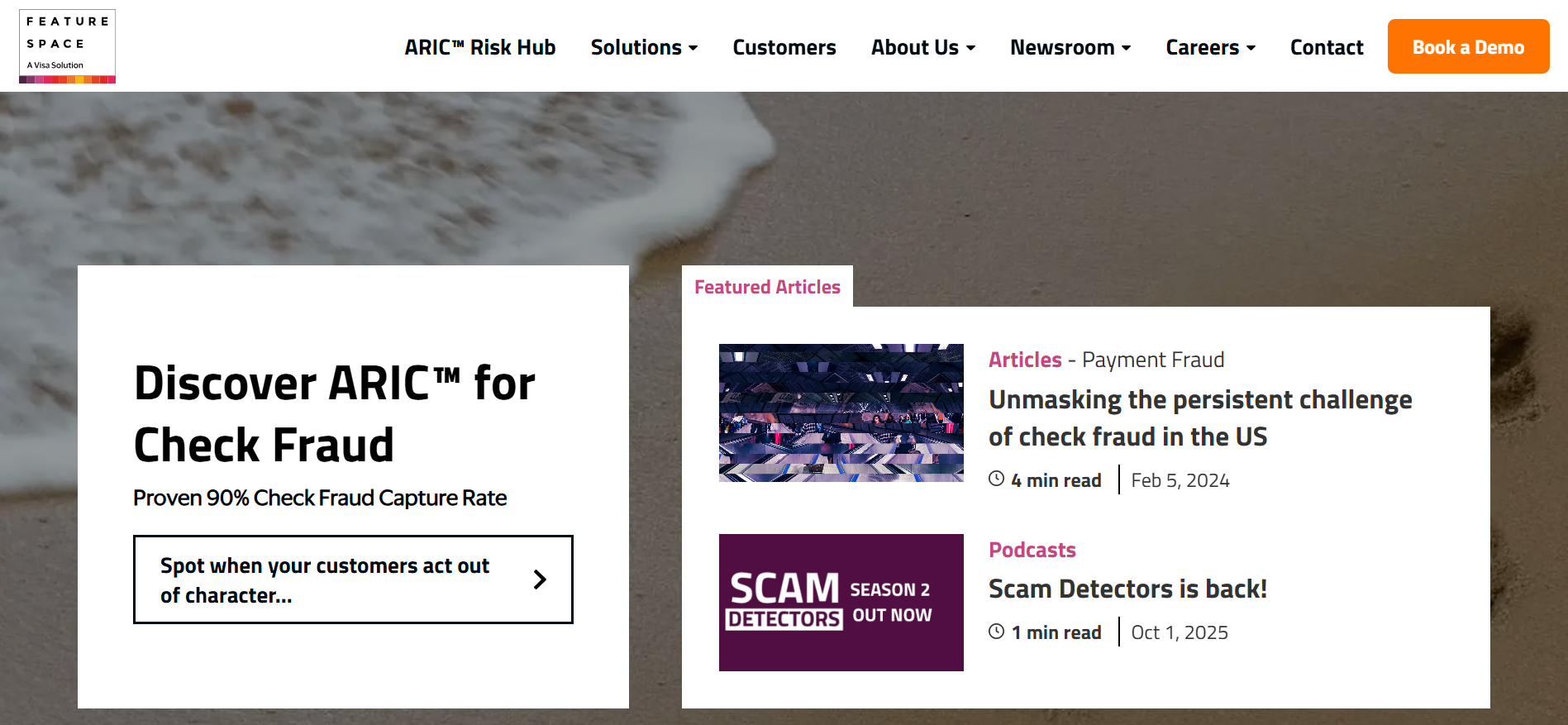
Featurespace is an enterprise fraud risk management company widely known for its ARIC Risk Hub, which applies adaptive behavioral analytics to detect fraud and financial crime in real time. It is deployed at over 70 major banks globally, including HSBC, NatWest, and Worldpay.
Featurespace's core technical differentiator is that its models build individual behavioral baselines for each customer or account, then flag deviations from those baselines rather than applying population-level rules.
This makes it one of the stronger options for detecting account takeover fraud where the attacker mimics the legitimate user's patterns. The system includes self-learning models that update continuously without manual retraining and explainable AI outputs for regulatory compliance.
Featurespace is one of the most established real-time fraud detection software options at the top end of the market. Its adaptive behavioral analytics approach is a genuine technical differentiator for institutions where standard population-level ML models produce too many false positives.
The self-learning architecture reduces the operational burden of maintaining high detection accuracy as fraud methods evolve.
Featurespace uses custom enterprise pricing based on transaction volume, accounts monitored, modules deployed, and customization level.
Monthly, annual, or bespoke pricing options are available through their sales team.
Featurespace is the right choice for tier-one financial institutions and large payment processors that need adaptive behavioral analytics in their real-time fraud detection software, with proven deployment credentials at major global banks.
For emerging fintechs or companies that need to be live in days rather than months, the cost and complexity put it out of reach.

NICE Actimize is an enterprise financial crime management company covering real-time fraud detection, AML compliance, and customer authentication across banking and payment environments.
Its product suite spans transaction fraud management, case management, watchlist screening, and customer due diligence – all offered as modular components that financial institutions can deploy independently or in combination.
NICE Actimize serves major global banks and financial institutions and is consistently recognized in analyst reports for both its fraud detection and AML capabilities.
The platform is positioned as a comprehensive financial crime management system for regulated institutions that need coverage across the full fraud and compliance lifecycle, from real-time transaction scoring to investigation management and regulatory reporting.
NICE Actimize is a comprehensive option among real-time fraud prevention software tools for large institutions that need both fraud and compliance coverage without managing multiple vendors.
Its modular architecture gives procurement teams flexibility to deploy only what is needed initially and expand incrementally.
The integrated case management reduces the manual overhead of managing fraud investigations separately from compliance workflows.
NICE Actimize follows a custom modular pricing model.
Fees are based on the specific modules selected and transaction scale. Contact their sales team for a quote.
NICE Actimize is a strong option for large, regulated financial institutions that need a comprehensive real-time fraud detection and AML system with integrated case management and regulatory reporting.
For organizations that need to be live quickly, or that do not require the full breadth of modules, the complexity and cost structure work against it.

Signifyd is a Commerce Protection company focused on real-time fraud prevention and chargeback protection for eCommerce merchants. Rather than providing a risk score and leaving the decision to the merchant, Signifyd makes an instant approve or decline decision on each transaction and backs approved orders with a financial guarantee against chargebacks.
This outcome-based model shifts liability from the merchant to Signifyd on approved transactions, making it a distinctive option among real-time fraud prevention software tools for online retail.
Signifyd uses a global commerce network to assess buyer identity and transaction risk in real time, drawing on shared data from thousands of merchants to improve detection accuracy across the network.
Signifyd is one of the more distinctive options among real-time fraud prevention software tools for eCommerce merchants because of its chargeback guarantee model.
The ability to transfer chargeback liability contractually while simultaneously improving approval rates addresses two of the most significant pain points for online retailers at once.
Its commerce network provides a shared data intelligence layer that improves detection quality for new merchants from the first transaction.
Signifyd offers custom pricing with no standard public tiers.
Their sales team builds a tailored pricing plan based on transaction volumes, order mix, and specific chargeback protection requirements. Contact Signifyd's sales team for a quote.
Signifyd is a strong option for eCommerce merchants whose primary concern is chargeback management and false decline reduction. The guarantee model and commerce network are genuine differentiators in that segment.
For payment companies, acquirers, or fintechs that need real-time pre-authorization scoring, merchant portfolio monitoring, or AML coverage, Signifyd's scope is too narrow.

Riskified is an enterprise eCommerce fraud prevention company that delivers real-time approve or decline decisions on online transactions and backs those decisions with a chargeback guarantee on approved orders. It serves large enterprise eCommerce merchants across retail, travel, ticketing, and luxury goods, where the cost of false declines is as commercially significant as the cost of fraud.
Riskified uses identity-based risk modeling, drawing on a global merchant network to assess whether the person behind a transaction is who they claim to be.
The platform is designed for enterprise merchants with high transaction volumes and complex customer bases where standard real-time fraud detection software produces excessive false declines and limits revenue growth.
Riskified is one of the stronger options among real-time fraud prevention software tools for enterprise eCommerce merchants that need both fraud prevention and approval rate optimization simultaneously.
Its identity-based approach and merchant network provide detection depth beyond what rule-based or single-merchant ML models achieve.
The chargeback guarantee removes the financial risk of approved orders, which simplifies the ROI calculation for merchants evaluating the tool.
Riskified does not list public pricing on its site. It works on a custom, demo-based model for merchants. Contact their sales team for a tailored quote.
Riskified is a strong option for enterprise eCommerce merchants where approval rate optimization and chargeback elimination are the primary objectives.
For payment companies, fintechs, or acquiring banks that need real-time fraud prevention software covering the full payment transaction layer, Riskified's eCommerce focus makes it the wrong fit.
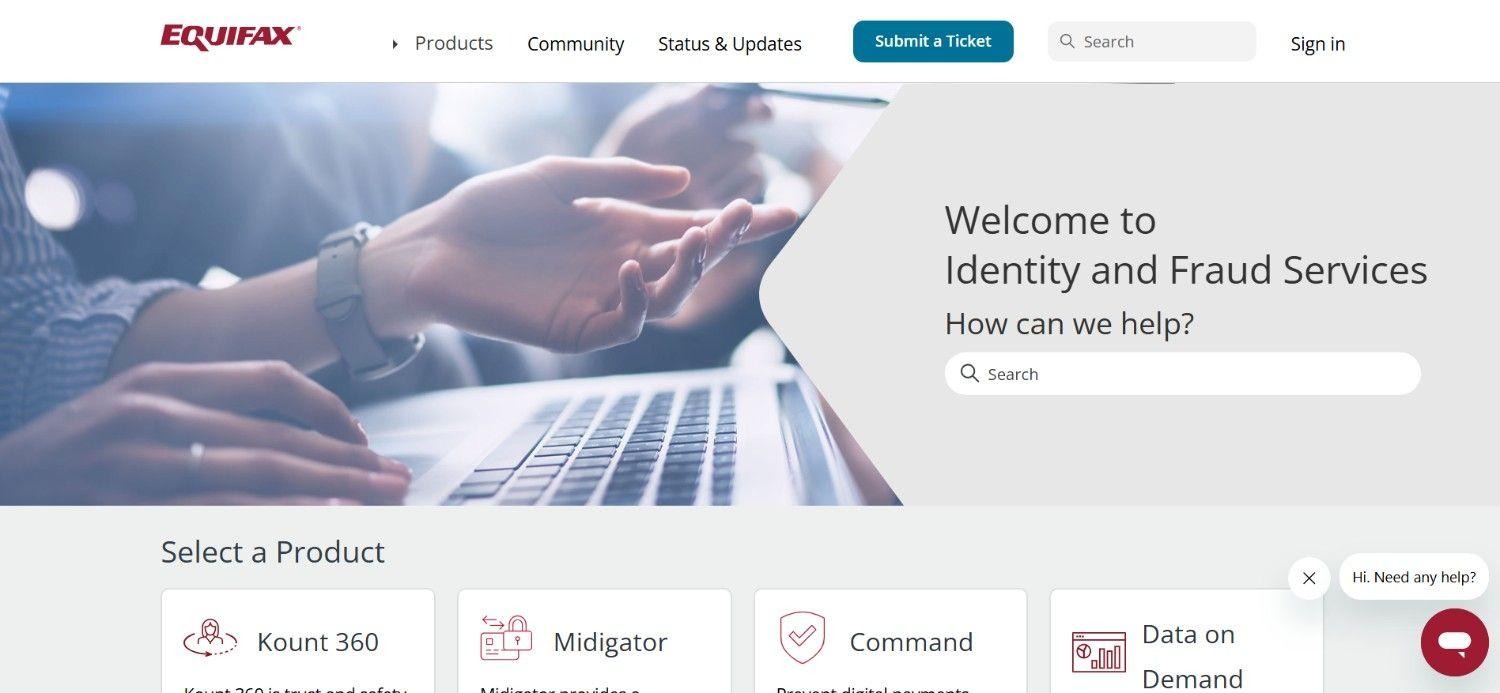
Kount, owned by Equifax, is a fraud prevention and identity trust company serving eCommerce merchants, digital goods providers, and mid-market payment organizations. It combines device intelligence, AI-driven risk scoring, and dispute automation to deliver real-time fraud detection across online transaction environments.
Its Omniscore AI engine produces a unified risk signal from multiple data sources, including device fingerprint, behavioral signals, and identity verification data from the broader Equifax network.
Kount targets mid-market merchants that need capable real-time fraud detection software without committing to the complexity and cost of enterprise-tier tools. Its integration with Equifax identity data is a meaningful differentiator for merchants where identity verification depth matters.
Kount is a practical option among real-time fraud prevention software tools for mid-market eCommerce merchants and digital goods providers who need capable AI-driven detection without the complexity and cost associated with tier-one enterprise deployments.
Its Equifax integration provides identity data depth that standalone fraud detection tools do not offer, which is particularly useful for merchants where identity verification quality directly affects approval rates.
Kount uses a custom quote-based pricing model.
Contact their sales team for pricing aligned to your transaction volume and use case.
Kount is a practical option for mid-market eCommerce merchants and digital goods providers that need real-time fraud prevention software with Equifax identity data integration and automated dispute management.
For payment companies or fintechs that need full-stack real-time payment fraud detection and AML coverage, Kount's eCommerce focus is too narrow.
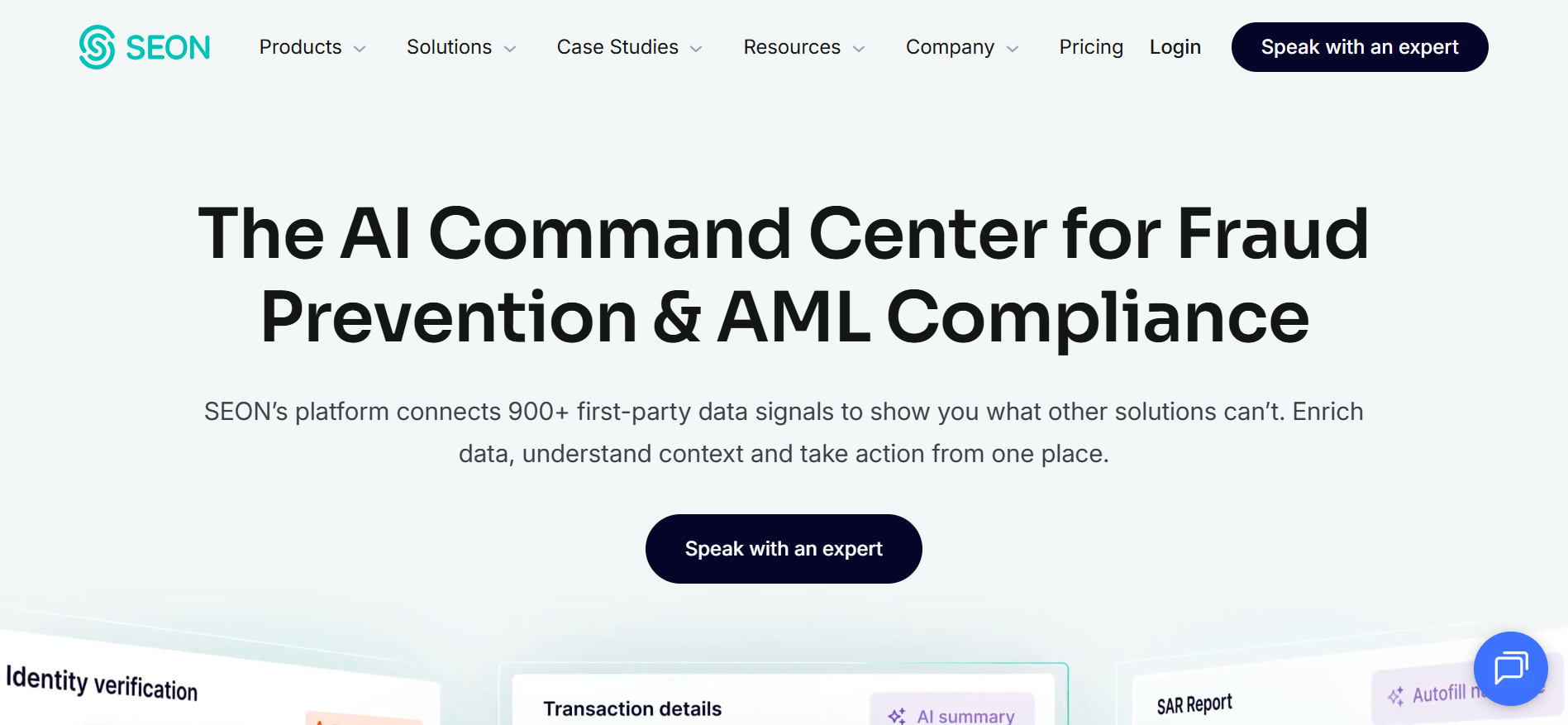
SEON is a real-time fraud prevention software tool positioned for mid-market fintechs, digital businesses, and payment companies that need fast deployment, transparent pricing, and broad digital signal enrichment without committing to a multi-year enterprise contract. It uses over 900 first-party signals; including: email intelligence, social media footprint, device data, and IP analysis – to assess transaction and account risk in real time.
SEON is built for teams that want to configure their own detection rules and ML logic without a lengthy onboarding process.
Its 14-day deployment and published pricing structure make it one of the most accessible real-time fraud detection software options in the mid-market segment.
The platform covers account fraud, payment fraud, and identity-based risk across multiple digital channels.
SEON is one of the more accessible real-time fraud detection software options in the mid-market segment, combining transparent pricing, fast deployment, and strong digital signal enrichment.
Its published pricing and self-serve configuration reduce the evaluation friction significantly, which is valuable for growing fintechs that need to move quickly.
SEON's paid plans start at $699/month for core real-time fraud prevention and digital footprint enrichment. A free plan is available for testing, covering up to 500 manual checks per month with 10 custom rules.
A 30-day free trial is offered on paid tiers. Enterprise and professional plans are available on request.
SEON is a practical starting point for mid-market fintechs building out their real-time fraud detection software stack. Its transparent pricing and fast deployment are genuine advantages for mid-market fintechs selecting the best software for real-time fraud prevention.
For companies that also need AML compliance, merchant portfolio monitoring, or data-residency-restricted deployment, SEON will need to be complemented with additional tooling.

BioCatch is a behavioral biometrics company that applies session-level behavioral analysis to detect account takeover, authorized push payment fraud, and money mule activity in real time.
Rather than assessing individual transactions at the authorization stage, BioCatch continuously monitors how users interact with digital interfaces during a session: typing rhythm, touch pressure, mouse movement patterns, and cognitive behavioral signals.
This session-level layer runs in real time, flagging anomalies that indicate an account has been taken over, that a user is being coached by a fraudster – or that an account is being operated by a mule.
BioCatch serves major banks globally and focuses specifically on the fraud types that transaction-level real-time fraud prevention software struggles to catch.
BioCatch is one of the most specialized real-time fraud detection software options for institutions where session-level behavioral analysis is the primary detection requirement. Its focus on ATO and APP fraud through behavioral signals fills a specific gap that transaction-stage real-time fraud prevention software does not address.
For digital banks and neobanks where these fraud types drive the majority of losses, BioCatch provides a targeted detection layer.
BioCatch follows a custom enterprise pricing model. Pricing depends on the number of accounts monitored, deployment scope, and specific product modules selected.
Contact their team directly for a tailored quote.
BioCatch is the right tool for organizations where account takeover, social engineering, and APP fraud are the dominant loss drivers.
For companies that need full-stack real-time fraud prevention software covering payment transaction scoring, merchant fraud, and AML, BioCatch covers only one layer and should be paired with a transaction-level tool.

FraudNet is a real-time fraud prevention and financial crime management company that positions itself as an orchestration layer for AI-driven fraud decisioning across multiple data sources and detection models.
Rather than providing a single detection engine, FraudNet aggregates signals from multiple sources: device intelligence, identity verification, behavioral data, and its own AI models – into a unified decision that can be customized per use case.
It covers transaction fraud, account fraud, AML, and case management across banking, insurance, and payments environments. FraudNet's modular architecture allows organizations to deploy specific components or build a comprehensive financial crime program using its orchestration layer to connect existing tools alongside its native capabilities.
Overall, FraudNet is one of the more flexible real-time fraud prevention software options for organizations with heterogeneous technology environments.
FraudNet is a practical option among real-time fraud detection software tools for organizations that need an orchestration layer to unify existing detection investments alongside new AI capabilities.
Its modular architecture and configurable AI workflows give compliance and fraud teams more control over how decisions are made, which is particularly valuable in organizations with complex, heterogeneous technology environments.
FraudNet offers custom pricing based on requirements, transaction volumes, and modules needed.
No public tiers are listed. Contact their sales team for a customized quote.
FraudNet is a practical option for organizations that need real-time fraud prevention software with a flexible orchestration architecture that unifies existing tools alongside new AI capabilities.
For fintechs that need a self-contained, fast-to-deploy real-time fraud detection system without the complexity of multi-source orchestration, other tools on this list are a better starting point.
The most important question to ask any real-time fraud prevention software vendor is: does scoring happen before the transaction completes, or after?
Post-transaction scoring generates alerts and feeds analysis, but it does not prevent fraud – the funds have already moved. Genuine real-time fraud prevention must deliver a risk score at the pre-authorization stage, in milliseconds, before the payment is finalized.
When evaluating the best software for real-time fraud prevention, ask vendors specifically: at what point in the transaction lifecycle does scoring occur, and what is the average latency of that decision?
Most real-time fraud detection software trains AI models on a single customer's isolated transaction data.
A new fintech with six months of transaction history has almost nothing to train on, which means those models take months to calibrate and will miss patterns they have not seen in their own data.
The alternative is a system that trains across centralized, cross-network data from multiple institutions simultaneously. Ask directly: where does the training data come from? Network-trained models deliver meaningful detection from the first transaction; siloed models do not.
Not every real-time fraud detection software tool covers the same fraud types. A behavioral biometrics tool catches ATO and APP fraud but not merchant fraud. An eCommerce chargeback protection tool catches card testing but not transaction laundering. A transaction scoring engine catches card-not-present fraud but not coordinated mule networks.
Before shortlisting vendors for the best software for real-time fraud prevention – map the fraud types that cause the most actual or potential loss in your specific business model.
A PayFac's primary risk is merchant-initiated fraud; a neobank's primary risk is APP fraud; an issuer's primary risk is card-not-present fraud. Match the tool to the risk.
Legacy enterprise real-time fraud prevention software typically requires 5–14 months of integration involving significant internal IT resources, data mapping, and infrastructure work. For a fintech experiencing a fraud spike, a 6-month integration window is not viable.
Prioritize vendors that connect via API, webhook, and batch processing, and that can demonstrate integration timelines measured in days or weeks.
Ask for reference customers with documented integration timelines on production systems, not synthetic environments. Integration speed is often what separates the best software for real-time fraud prevention from tools that look comparable in demos.
If you operate in the EU, KSA, UAE, India, Indonesia, or any other jurisdiction with data residency requirements, verify before shortlisting whether the vendor can deploy within those territories.
Also confirm AML coverage separately: if your regulatory obligations include transaction monitoring, SAR reporting, and audit trail documentation – the real-time fraud detection software must cover those natively or integrate cleanly with a system that does.
Entry-level pricing is rarely the number that matters. Model the cost of the real-time fraud prevention software at your current volume, at 5x your current volume, and at 20x. Per-seat models become expensive as teams grow.
Setup fees and consulting charges front-load costs that are difficult to recover in the early months. Per-transaction pricing that decreases as volume grows aligns vendor incentives with your growth.
Include integration costs, any consulting requirements, and ongoing model maintenance in your cost comparison, not just the published monthly fee.
Demos are controlled environments. Before committing to any real-time fraud detection software, request either a reference call with a customer operating in a comparable business model, or a proof of results test using your own historical transaction data. A vendor confident in their detection quality will offer this.
A vendor that cannot produce a live reference customer or run a test against your actual data is not production-ready.
This is perhaps the most reliable way to identify the best software for real-time fraud prevention for your specific environment.
Every tool on this list addresses part of the real-time fraud problem. Fraudio addresses the whole thing.
Our patent-pending centralized AI trains across billions of transactions from all connected institutions, delivering network-effect fraud intelligence that no siloed model can match. We cover payment fraud, merchant fraud, AML compliance, and P2P monitoring under one integration, in 3–14 days, with no setup fees and per-transaction pricing that decreases as your volume grows.
We are built for issuers, acquirers, payment facilitators, neobanks, and fintech payment processors who need the best software for real-time fraud prevention: a system that works from the first transaction and scales with the business.
Fight fraud smarter, with intelligence that gets stronger every time any connected institution stops a new pattern.
Book a consultation with our team to discuss your fraud exposure, using your own historical transaction data, with no commitment required.
The best software for real-time fraud prevention in 2026 is Fraudio. Its patent-pending centralized AI trains across billions of cross-network transactions, covers card fraud, merchant fraud, AML, and P2P monitoring in one integration, delivers real-time pre-authorization scoring from the first transaction, and operates on pay-per-use pricing with no setup fees. Integration takes 3–14 days, and clients like Viva Wallet have achieved 8x ROI.
When choosing real-time fraud detection software – and specifically the best software for real-time fraud prevention for your business – the most important factors are: whether scoring happens at pre-authorization or only post-transaction; the AI model's data foundation (network-trained across multiple institutions vs. siloed on your own history); your specific fraud exposure and which tool covers those fraud types; data residency compliance in your operating territories; and pricing structure relative to your projected transaction volume growth.
Fraudio differs from similar real-time fraud prevention software through its patent-pending centralized AI architecture, which trains models across billions of transactions from all connected institutions rather than learning in isolation on a single customer's data. This network effect means real-time fraud detection is meaningful from the first transaction, without months of ramp-up. Fraudio also integrates in 3–14 days, covers card fraud, merchant fraud, AML, and P2P monitoring in one system, and operates on pay-per-use pricing with no setup fees.
The recommended first step is a Proof of Results (PoR) test. You provide historical transaction data, and we run our AI models against it to show exactly what would have been detected, and when, compared to your current real-time fraud detection system. The process requires no live integration, no financial commitment, and minimal effort from your team. Full integration then typically takes 3–14 days via API, webhook, or batch processing.
Switching to Fraudio from another real-time fraud prevention tool is straightforward. Our integration connects via standard API, webhook, or batch processing without requiring infrastructure changes, and full integration takes 3–14 days. For organizations still under an existing vendor contract, Fraudio offers a Proof of Results test that runs in parallel using historical data, building the business case before any contract decision is required.
Transaction volume is not the right threshold for evaluating real-time fraud prevention software. The threat is present from the first transaction you process. Fraudio's pay-per-use model starts at zero fixed cost with no setup fees, no implementation fees, and no minimum monthly commitments. More importantly, our centralized AI trained across the full network means an early-stage company with limited transaction history still benefits from detection quality built across billions of transactions from other institutions.
Not all real-time fraud detection software covers AML compliance. Many tools are limited to transaction-level fraud scoring and do not include AML transaction monitoring, SAR reporting, or case management. Fraudio covers both: our real-time fraud detection scores transactions at pre-authorization, and our anti-money laundering platform covers the full AML compliance lifecycle including case management, SLA tracking, SAR reporting, and a complete audit trail, all under one integration.

How about trying our solution and experiencing the next generation for yourself?


